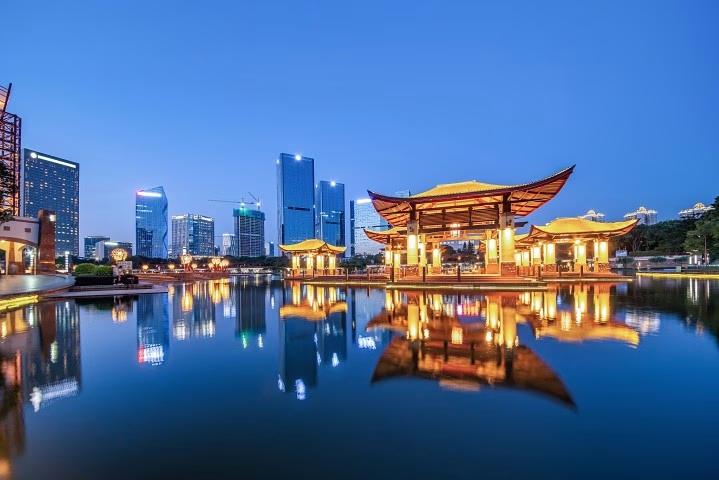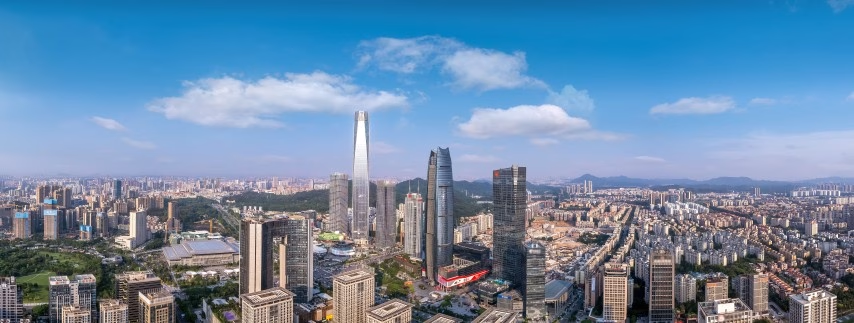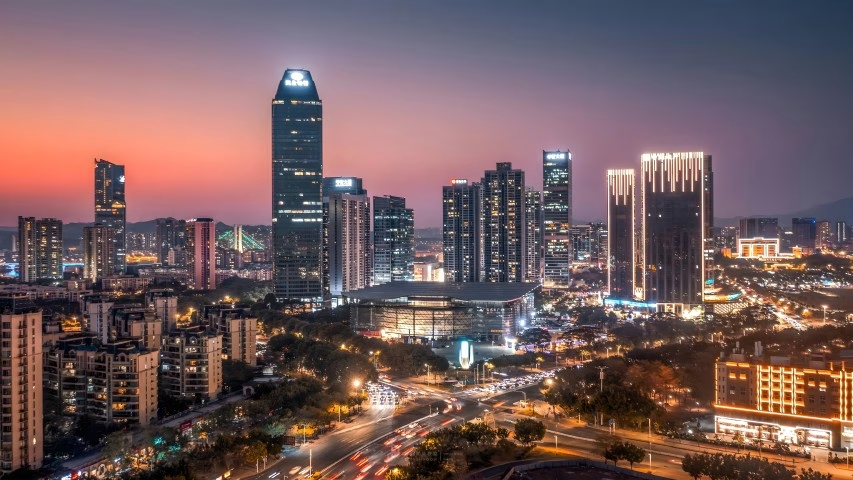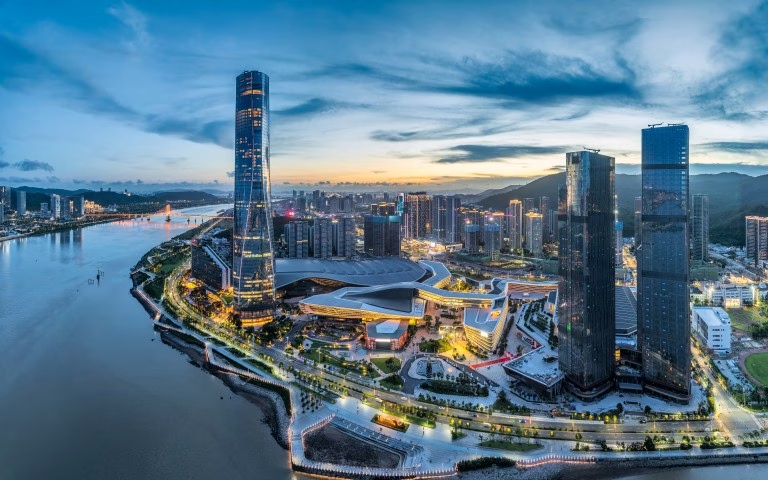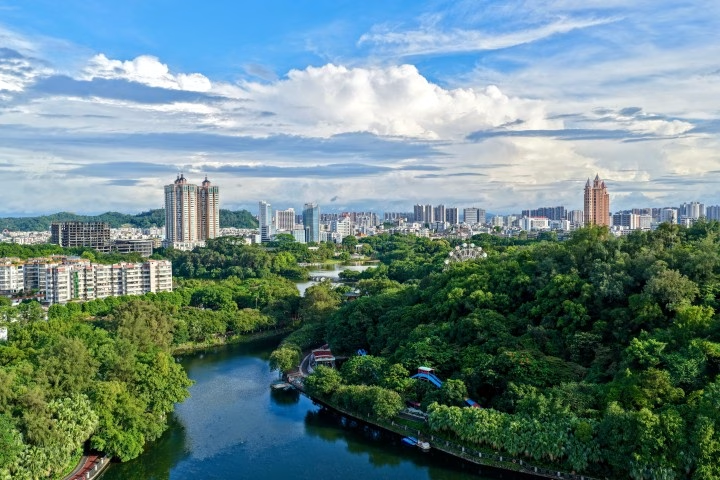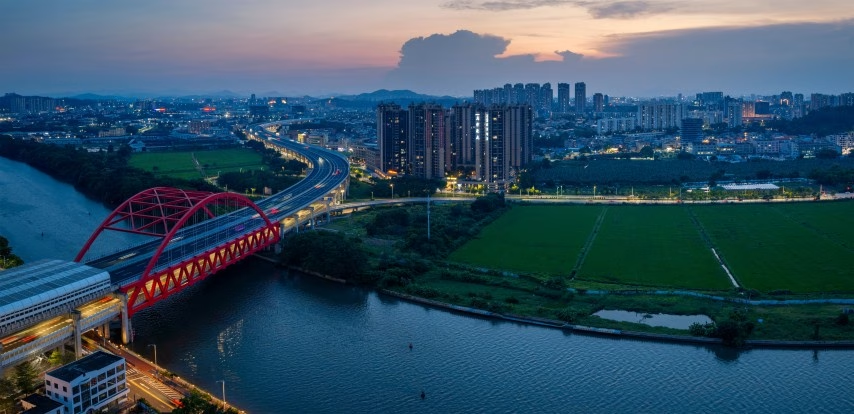
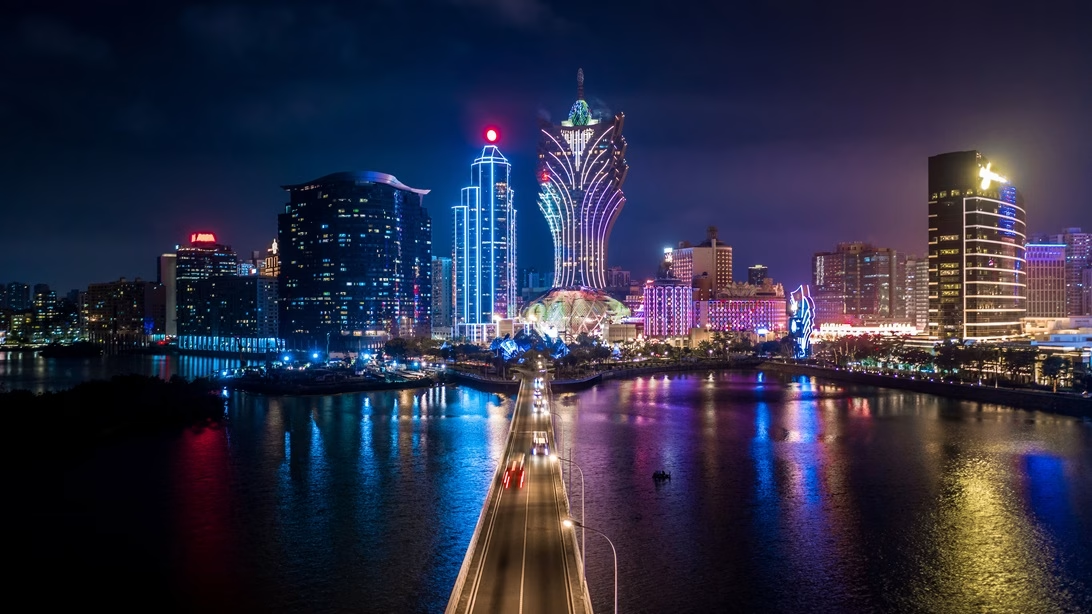
The Greater Bay Area consists of the two Special Administrative Regions of Hong Kong and Macao, and the nine municipalities of Guangzhou, Shenzhen, Zhuhai, Foshan, Huizhou, Dongguan, Zhongshan, Jiangmen, and Zhaoqing in Guangdong Province.
The Greater Bay Area (GBA) – a region in Southern China that comprises two Special Administrative Regions and nine municipalities in Guangdong Province covering a total area of 56,000 km2 with approx. 70 million population and an aggregate GDP of US$1.5 trillion at the end of 2017 – is an initiative that has great significance in China’s development blueprint.
The GBA blueprint was revealed in February 2019 and details the concepts of how to transform the eleven cities into a global economic powerhouse. The blueprint touches upon encouraging governments in Hong Kong, Macao, and Guangdong to strengthen communication and cooperation with each other, and promoting the idea of cross-border collaboration. Hong Kong, Macao, Shenzhen and Guangzhou would be the key cities and core engines in GBA to lead regional development and reform as well as the driving forces for innovation.
Average GDP per capita more than double the China average
12% of China's GDP
2.6 times as big as New York Metropolitan Area
12th largest economic entity in the world
9 times as many people as in San Francisco Bay Area
Consumers spending almost 30% of their income on daily expenses
The consumer market expected to double by 2025
GBA Cities
Area: 1,110 Km2
Population: 7.33 million
GDP: US $362.44 bn
Per-capita GDP: US $49,464
Area: 33 Km2
Population: 0.67 million
GDP: US $22.73 bn
Per-capita GDP: US $33,784
Area: 1,997 Km2
Population: 17.68 million
GDP: US $482.15 bn
Per-capita GDP: US $27,250
Area: 7,434 Km2
Population: 18.81 million
GDP: US $429.32 bn
Per-capita GDP: US $22,840
Area: 1,736 Km2
Population: 2.47 million
GDP: US $60.22 bn
Per-capita GDP: US $24,370
Area: 1,784 Km2
Population: 4.47 million
GDP: US $54.06 bn
Per-capita GDP: US $12,150
Area: 2,460 Km2
Population: 10.54 million
GDP: US $166.74 bn
Per-capita GDP: US $15,880
Area: 3,798 Km2
Population: 9.61 million
GDP: US $189.04 bn
Per-capita GDP: US $19,904
Area: 14,891 Km2
Population: 4.13 million
GDP: US $40.27 bn
Per-capita GDP: US $9,750
Area: 11,347 Km2
Population: 6.07 million
GDP: US $80.41 bn
Per-capita GDP: US $13,260
Area: 9,507 Km2
Population: 4.84 million
GDP: US $56.17 bn
Per-capita GDP: US $11,620
Source: Census and Statistics Department of Hong Kong, Statistics and Census Service of Macao, the statistics bureaux of the relevant PRD cities, HKTDC
CW's Greater Bay Area Focus
For the past years, CW Group has been cultivating good relationship with government entities in Hong Kong, Shenzhen, Guangzhou and Zhuhai as well as collaborating with foreign chambers and working closely with our strategic partners in the GBA. We have developed a strong GBA presence with our headquarter in Hong Kong and our China offices strategically located in Shenzhen and Guangzhou.
As your trusted advisor, CW can assist your enterprise or business to set foot in Shenzhen, Guangzhou and further afield in the GBA via Hong Kong as a gateway to the Chinese market and conversely help Chinese companies in the GBA to go global with our extensive Mainland and International network.
With the ever-changing and complicated regulatory environment in China, our strategic partnership with Z&T Law Firm in Guangzhou provides legal consultancy services such as IP consultation, drafting business contracts, labor relations management and more. All in all, CW brings a one-stop solution to our clients and foreign enterprises planning to capture the tremendous opportunities introduced by the GBA Initiative.
CW's Insights on Greater Bay Area
Company Chops in Chinese Mainland: What Foreign Businesses Need to Know and Control
Foreign companies in Chinese Mainland often underestimate the legal and operational significance of company chops. They are not merely administrative stamps. They sit at the
Internal Control Review Menu for SMEs: How to Choose the Right Scope and Get the Best Outcomes
Master data governance and access controls create the most significant downstream issues for SMEs, as weak customer, vendor, or item data—and conflicting user access rights—can
What an Internal Control Review Really Involves
An internal control review assesses whether controls are well‑designed and operating effectively, highlighting gaps in governance, key financial processes, and technology controls, while common challenges
Establishing a Foreign-Invested Enterprise in China: Regulatory Framework and Key Considerations
Establishing a foreign-invested enterprise in China requires alignment between market access rules, business scope, capital structure, and ongoing compliance obligations. Recent legal reforms have introduced
Internal Control Review: What It Is—and What It Isn’t
An Internal Control Review evaluates whether an organization’s control framework is properly designed, implemented, and operating effectively, and identifies prioritized actions to address control gaps
Hong Kong’s implementation of the OECD Pillar Two framework introduces new notification and reporting obligations for multinational enterprise groups. This article outlines the statutory deadlines